
EVALUACIÓN DE LA VISCOSIDAD EN DISOLUCIONES DE HEMOGLOBINA HUMANA: UNA REVISIÓN
Palabras clave:
viscosidad; hemoglobina; glóbulos rojos; EPR; NMR.Resumen
RESUMEN
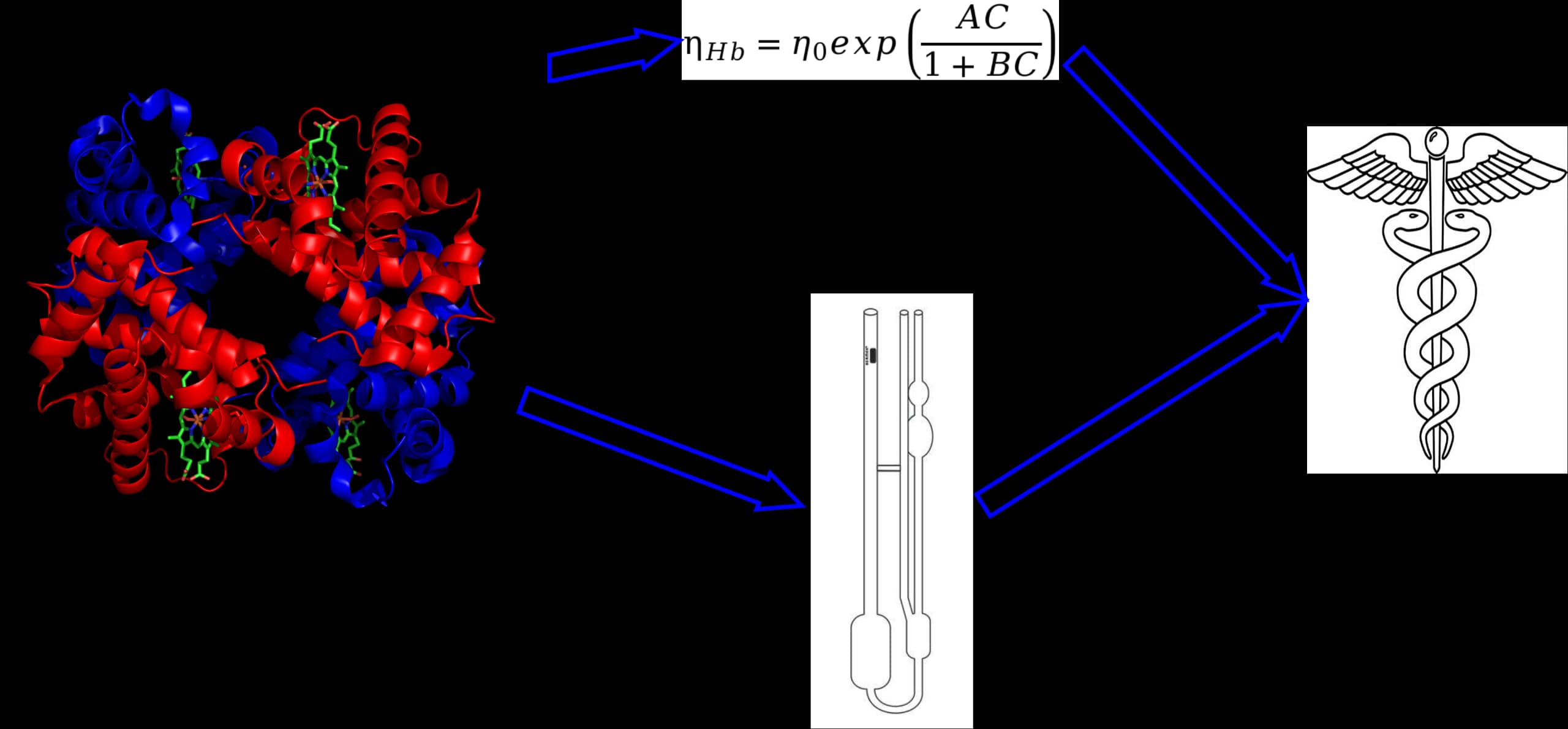
La viscosidad de la hemoglobina humana es un parámetro novedoso para evaluar clínicamente patologías que modifican la reología sanguínea. En este trabajo de revisión se analizan sus valores en disoluciones de concentración cercana a la intracelular y suspensiones de glóbulos rojos, así como los fundamentos teóricos y métodos experimentales utilizados en su determinación, para crear referencias útiles en el desarrollo de nuevas aplicaciones médicas o en el empleo de las existentes. Se incluyen determinaciones realizadas con viscosimetría (capilar, rotacional, “cuerpo
descendente”), resonancia paramagnética electrónica (RPE) y resonancia magnética nuclear (RMN). Los métodos más adecuados para evaluar la viscosidad en disoluciones de hemoglobina son la viscosimetría (6 mPa.s, 37 °C) y la relajación magnética nuclear (11 mPa.s, 20 °C). La RPE y los restantes métodos basados en RMN estiman valores de micro-viscosidad (1,5 mPa.s-2,0 mPa s) que pueden corregirse para obtener la viscosidad de la disolución.
Citas
Valerio-de arruda, M. et al. “Etandarization for
obtaining blood viscosity: a systematic review”,
European Journal of Hematology. 2021, 106(5), 597
ISSN: 0902-4441
https://doi.org/10.1111/ejh.13594
Huamaní, C. et al. “Importancia de la medición de
la viscosidad sanguínea: retos y limitaciones”, Acta
Médica del Peru. 2023, 40(2), 161-166. ISSN: 1728
http://dx.doi.org/10.35663/amp.2023.402.2398
Abbasian, M. et al. “Effects of different non
newtonian models on unsteady blood flow
hemodynamics in patient-specific arterial models with
in-vivo validation”, Computer Methods and Programs
in Biomedicine. 2020, 186, 105-185. ISSN: 1872
https://doi.org/10.1016/j.cmpb.2019.105185
Popel, A. S.; Johnson, P. C. “Microcirculation and
hemorheology”, Annu. Rev. Fluid. Mech. 2005, 37,
-69. ISSN: 0066-4189
https://doi.org/10.1146/annurev.fluid.37.042604.1339
Ciancaglini, C. “Hidrodinamia de la circulación
vascular periférica normal y patológica”, Revista
Costarricense de Cardiología. 2004, 6(2), 43-61.
ISSN: 1409-4142.
Blanco-Santos, Y.; Areces-López, A.; Gámez
Pérez, A. “Síndrome de hiperviscosidad: características fisiopatológicas y clínicas”, Revista
Científico Estudiantil de la Universidad de Ciencias
Médicas de la Habana. 2020, 59(278), e840. ISSN:
-6935.
Gertz, M. A. “Acute hyperviscosity: síndromes and
management”, Blood. 2018, 132(13), 1379-1385.
ISSN: 0006-4971 https://doi.org/10.1182/blood-2018
-46816
Celik, T. et al. “Whole blood viscosity and
cardivascular diseases: a forgotten old player of the
game”, Medical Principles and Practice. 2016, 25(5),
-500. ISSN: 1011-7571
https://doi.org/10.1159/000446916
Cekirdekci, E. I.; Bugan, B. “Whole blood viscosity
in microvascular angina and coronary artery disease:
significance and utility”, Rev. Port. Cardiol. 2020,
(1), 17-23. ISSN: 2174-2049
https://doi.org/10.1016/j.repc.2019.04.008
Furukawa, K. et al. “Increased blood viscosity in
ischemic stroke patients with small artery occlusion
measured by an electromagnetic spinning sphere
viscometer”, J. Stroke Cerebrovasc. Dis. 2016,
(11), 2762-2769. ISSN: 1052-3057
https://doi.org/10.1016/j.jstrokecerebrovasdis.2016.07
.031
Song, S. H. et al. “Elevated blood viscosity is
associated with cerebral small vessel disease in
patients with acute ischemic stroke”, BMC Neurol.
, 17(1), 20. ISSN: 1471-2377
https://doi.org/10.1186/s12883-017-0808-3
Huamaní, C. et al. “Prediction of blood viscosity
based on usual hematological parameters in a
clinically healthy population living in a high-altitude
city”, High Alt. Med. Biol. 2021, 23(1), 78-84. ISSN:
-8682 https://doi.org/10.1089/ham.2021.0165
Sloop, G. et al. “The role of blood viscosity in
infectious diseases”, Cureus. 2020, 12(2), e7090.
ISSN: 2168-8184 https://doi.org/10.7759/cureus.7090
Chen, G. et al. “Regulation of blood viscosity in
disease prevention and treatment”, Chin. Sci. Bull.
, 57, 1946-1952. ISSN: 0023-074X
https://doi.org/10.1007/s11434-012-5165-4
Jiehui, S. et al. “Blood viscosity in subjects with
type 2 Diabetes Mellitus: roles of hyperglycemia and
elevated plasma fibrinogen”, Front. Physiol. 2022, 13,
ISSN: 1664-042X
https://doi.org/10.3389./phys.2022.827428
Kucukal, E. et al. “Whole blood viscosity and red
blood cell adhesion: potential biomarkers for targeted
and curative therapies in sickle cell disease”, Am. J.
Hematol. 2020, 95(11), 1246-1256. ISSN: 1096-8652
https://doi.org/10.1002/ajh.25933
Ajayi, O. I.; Famodu, A. A.; Oviasu, E.
“Fibrinogen concentration: a marker of cardiovascular
disorders in nigerians”, Turk. J. Haematol. 2007,
(1), 18-22. ISSN: 1308-5263.
Lores-Guevara, M. A. et al. “Plasma dynamic
viscosity determined by NMR”, Applied Magnetic
Resonance. 2018, 49(10), 1075-1083. ISSN: 1613
https://doi.or/10.1007/s00723-018-1026
Mengana-Torres, Y. et al. “Dynamic viscosity of
blood serum determined using proton magnetic
relaxation”, Applied Magnetic Resonance. 2024,
(5), 527-536. ISSN: 1613-7507
https://doi.org./10.1007./s00723-024-01644-0
Szabó, E.; Baka, E. Z.; Tamás, K. “Shear rate
induced viscosity change of human blood samples and
blood mimicking fluids”, Acta of bioengineering and
biomechanics. 2024, 26(1), 99-107. ISSN: 1509-409X
https://doi.org/10.37190/abb-02405-2024-03
Malomuzh N. P. et al. “Characteristic changes in
the density and shear viscosity of human blood
plasma with varying protein concentration”.
Ukrainian Journal of Physics. 2020, 2, 151. ISSN:
-400X https://doi.org/10.15407/ujpe65.2.151
Nader, E. et al. “Blood rheology: key parameters,
impact on blood flow, role in sickle cell disease and
effects of exercise”, Frontiers in physiology. 2019,
, 1329. ISSN: 1664-042X
https://doi.org/10.3389/fphys.2019.01329
Trejo-Soto, C.; Hernández-Machado, A.; Mussi,
V. “Normalization of blood viscosity according to the
hematocrit and the shear rate”, Micromachines
(Basel). 2022, 13(3), 357. ISSN: 2072-666X.
https://doi.org/10.3390/mi13030357
Rosencranz, R.; Bogen, S. A. “Clinical laboratory
measurement of serum, plasma and blood viscosity”,
Pathology Patterns Reviews. 2006, 125(Suppl 1),
S78-S86. ISSN: 1542-2305
https://doi.org/10.1309/FFF7U8RRPK26VAPY
Hund, S. J.; Kameneva, M. V.; Antaki, J. F. “A
quasi-mechanical mathematical representation for
blood viscosity”, Fluids. 2017, 2(1), 10. ISSN: 2311
https://doi.org/10.3390/fluids2010010
Sirs, J. A. “Erythrocyte Flexibility and Whole
blood Viscosity”. In: Lowe, G.D.O.; Barbenel, J.C.;
Forbes, C.D. (eds). Clinical aspects of blood viscosity
and cell deformability. London: Springer, 1981.
ISBN: 9781447131052, https://doi.org/10.1007/978
-4471-3105-2_2
Carallo, I. C. et al. “The effect of HDL cholesterol
on blood and plasma viscosity in healthy subjects”,
Clinical hemorheology and microcirculation. 2013,
(2), 223-229. ISSN: 1386-0291
https://doi.org/10.3233/CH-2012-1624
Carallo, I. C. et al. “Influence of blood lipids on
plasma and blood viscosity”, Clinical hemorheology
and microcirculation. 2014. 57(3), 267-274. ISSN:
-0291 https://doi.org/10.3233/CH-131705
Briole, A.; Podgorski, T.; Abou, B. “Molecular
rotors as intracellular probes of red blood cell
stiffness”, Soft Matter. 2021, 17, 4525. ISSN:1744
X https://doi.org/10.1039/d1sm00321f.hal
v2
Mehri, R.; Mavriplis, C; Fenech, M. “Red blood
cell aggregates and their effect on non-newtonian
blood viscosity at low hematocrit in a two-fluid low
shear rate microfluidic system”, Plos One. 2018, 3(7),
e0199911. ISSN: 1932-6203
https://doi.org/10.1371/journal.pone.0199911
Glenn, A.; Catherine, E.; Armonstrong, E.
“Physiology of red and white blood cells”,
Anaesthesia and Intensive Care Medicine. 2019,
(3), 170-174. ISSN: 1472-0299
https://doi.org/10.1016/j.mpaic.2019.01.001
Endre, Z. H.; Kuchel, P. W. “Viscosity of
concentrated solutions and of human erythrocyte
cytoplasm determined from NMR measurement of
molecular correlation times. The dependence of
viscosity on cell volume”, Biophysical Chemistry.
, 24, 337-356. ISSN: 1873-4200
https://doi.org/10.1016/0301-4622(86)85039-6
Monkos, K. “Viscometric study of human, bovine,
equine and ovine haemoglobin in aqueous solution”,
International journal of biological macromolecules.
, 16(1), 31-35. ISSN: 0141-8130
https://doi.org/10.1016/0141-8130(94)90008-6
Lores-Guevara, M. A. et al. “EPR study of the
hemoglobin rotational correlation time and
microviscosity during the polymerization of
hemoglobin S”, Applied Magnetic Resonance. 2006,
(1), 121-128. ISSN: 1613-7507
https://doi.org/10.1007/BF03166986
Rodríguez-de la Cruz, N. J. et al. “Dynamic
viscosity of hemoglobin solutions determined by
transverse proton magnetic relaxation”, Hemoglobin.
, 49(3), 172-177. ISSN: 0363-0269
https://doi.org/10.1080/03630269.2025.2493949
Lores-Guevara, M. A. Aplicaciones médicas de la
Relajación Magnética Nuclear. 1era Edición. Santiago
de Cuba: Ediciones Universidad de Oriente, 2023.
ISBN: 978-959-207-731-7
Mengana-Torres, Y et al. “Determination of
dynamic viscosity in samples of blood plasma and
hemoglobin solution using nuclear magnetic
resonance”, International Journal of Biochemistry,
Biophysics & Molecular Biology. 2019, 4(2), 25-30.
ISSN: 2575-5889
https://doi.org/10.116480.11648/ijbbmb.20190402.12
Cabal-MIRABAL, C. et al. “Assessment of
contribution of curie-spin mechanism in proton
relaxation during aggregation process of hemoglobin
S”, Applied Magnetic Resonance. 2020, 51 (12),
-1652. ISSN: 1613-7507
https://doi.org/10.1007/s00723-020-01241-x
Mengana-Torres, Y. et al. “Procedimiento
experimental para determinar la viscosidad dinámica
utilizando la velocidad de relajación protónica”,
Revista Cubana de Química. 2024, 36(3). e-ISSN:
-5421.
Cabal-Mirabal, C. A. et al. “Kinetics studies of
complex biomedical process by magnetic resonance.
cuban experiences”, Applied Magnetic Resonance.
, 49(6), 589-598. ISSN: 1613-7507
https://doi.org/10.1007/s00723-018-0985-2
Lores- Guevara, M. A.; García-Naranjo, J. C.;
Cabal-Mirabal, C. A. “MR relaxation studies of
hemoglobin aggregation process in sickle cell disease:
application for diagnostics and therapeutics”, Applied
Magnetic Resonance. 2019, 50(4), 541-551. ISSN:
-7507 https://doi.org/10.1007/s00723-018-1104
Lores-Guevara, M. A. et al. “Proton MRD profile
analysis in intracellular hemoglobin solutions: a three
sites exchange model approach”, Applied Magnetic
Resonance. 2022, 53, 387-399. ISSN: 1613-7507
https://doi.org/10.1007/s00723-021-01452-w
Lores-Guevara, M. A. et al. “Estudio de la anemia
drepanocítica empleando resonancia magnética:
potenciales aplicaciones médicas”, An. Acad. Cienc.
Cuba. 2025, 15(1), e2896. ISSN: 2304-0106
http://www.revistaccuba.cu/index.php/revacc/article/v
iew/2896
Endre, Z. H.; Chapman, B. E.; Kuchel, P. W.
“Intra-erythrocyte microviscosity and diffusion of
specifically labelled [glycyl-alpha-13C] glutathione by
using 13C NMR”, Biochemical Journal. 1983, 216(3),
-660. ISSN: 0264-6021
https://doi.org/10.1042/bj2160655
Lores-Guevara, M. A. et al. “Nuevo método para
determinar la viscosidad en plasma sanguíneo y solución de hemoglobina”, Rev. Cubana Hematol.
Lnmunol. Hemoter. 2018, 33(S1). ISSN: 1561-2996
https://revhematologia.sld.cu/index.php/hih/artcle/ve
w/652
Buniak K. “Fast field cycling relaxometry:
application of hemoglobin solutions using the Three
Tau Model”. Master Thesis Dissertation on Medical
Physics. University of Surrey, 2024.
Menzel, F. et al. “Communication versus
waterproofing: the physics of insect cuticular
hydrocarbons”, The Journal of experimental biology.
, 222, jeb210807. ISSN: 0022-0949 https://doi.org/10.1242/jeb.210807
Mauer, J. et al. “Flow-induced transitions of red
blood cell shapes under shear”, Phys. Rev. Lett. 2018, 121,
ISSN:
-7114
https://doi.org/10.1103/PhysRevLett.121.118103
Minetti, C. et al. “Dynamics of a large population
of red blood cells under shear flow”, Journal of Fluid
Mechanics. 2019, 864, 408-448. ISSN: 0022-1120
https://doi.org/10.1017/jfm.2019.42
Losserand, S.; Coupier, G.; Podgorski, T.
“Migration velocity of red blood cells in
microchannels”, Microvascular research. 2019, 124,
-36.
ISSN:
-2862
https://doi.org/10.1016/j.mvr.2019.02.003
Shen, Z. et al. “Inversion of hematocrit partition at
microfluidic bifurcations”, Microvascular research.
, 105, 40-46. ISSN: https://doi.org/10.1016/j.mvr.2015.12.009
Descargas
Publicado
Cómo citar
Número
Sección
Licencia
Derechos de autor 2025 Néstor J. Rodríguez-de la-Cruz, Claudia C. García-Cruz, Yamirka Alonso-Geli, Yulianela Mengana-Torres, Manuel A. Lores-Guevara

Esta obra está bajo una licencia internacional Creative Commons Atribución-NoComercial-SinDerivadas 4.0.
Esta revista proporciona un acceso abierto inmediato a su contenido, basado en el principio de que ofrecer al público un acceso libre a las investigaciones ayuda a un mayor intercambio global de conocimiento. Cada autor es responsable del contenido de cada uno de sus artículos.